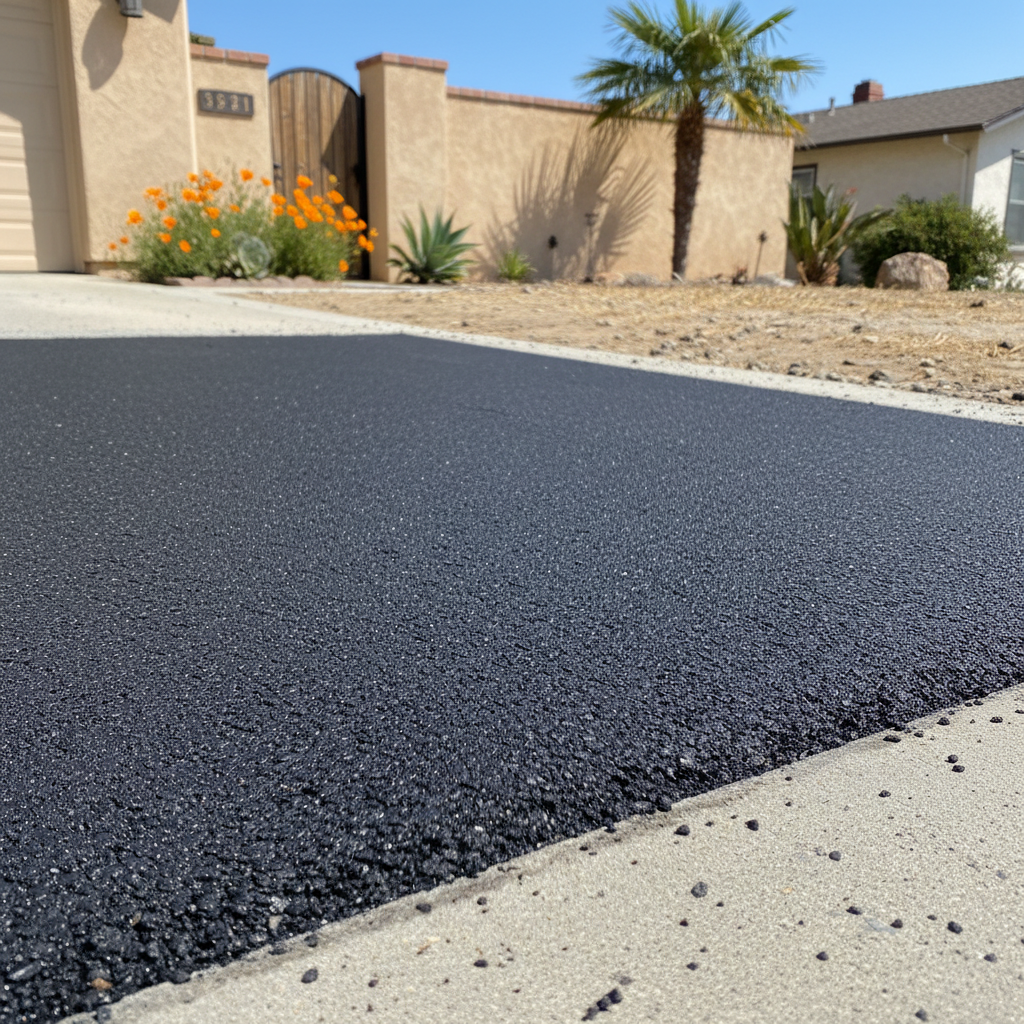
When property owners in Belmont Shore or up around Bixby Knolls walk out to their driveway and notice a spiderweb of cracks forming right where they park their car, they are not alone. Asphalt takes a beating around here, and fixing Asphalt should not feel like a guessing game. Over the years running Diamond Asphalt, our team has heard just about every question a homeowner can throw at us. Here are straight answers to the most common Asphalt questions, with no sales pitch attached.
Why is my asphalt cracking if it rarely freezes in Long Beach?
People think freeze-thaw cycles are the main enemy of Asphalt, but they forget about our intense coastal sun and occasional heavy downpours in Long Beach, CA. Long Beach gets plenty of UV radiation that bakes the flexible oils right out of the Asphalt binder. Once that happens, the Asphalt surface becomes very brittle. When winter rains finally arrive, water slips into those tiny pores and micro-cracks. Add the weight of your vehicles rolling over that softened sub-base day after day, and Asphalt cracks pop open fast.
How do I know if I need a simple patch or a full replacement?
Look closely at the Asphalt damage. If you have a localized hole or a single crack line, Asphalt Patching usually does the trick. But if the surrounding pavement is alligator-cracking into small, interconnected squares, that means the base underneath has failed. Patching over a failed base is just throwing money down the drain because the new Asphalt patch will sink right along with the bad soil beneath it. When the Asphalt damage covers more than a quarter of the total surface area, Diamond Asphalt usually recommends a complete removal and repave.
Can I just use those DIY cold-patch buckets from the hardware store?
Property owners can use them, but treat them like what they are: a temporary Band-Aid for Asphalt. Cold-patch material is soft and does not compact under pressure the way hot-mix Asphalt does. In our warm Southern California climate, DIY Asphalt patches tend to stay gummy, sticking to your tires on a hot afternoon and tracking right onto your garage floor. If you want something that lasts more than a few months, you need proper hot-mix application or professional infrared thermal bonding for your Asphalt surfaces.
How long should I stay off the driveway after a repair?
It depends on the scope of the Asphalt repair and the temperature outside, but generally, you want to keep foot traffic off new Asphalt patches for at least a few hours and keep vehicles away for a full 24 to 48 hours. Asphalt cures by cooling down and losing its petroleum volatiles. Even if it feels hard to the touch, a heavy SUV parked on fresh Asphalt too soon can leave deep depressions. Give the Asphalt a couple of days to fully harden up.
What's the best way to keep weeds from growing through my cracks?
Weeds love settling into Asphalt cracks because dirt blows in and catches moisture. Pulling them out by hand only leaves the roots behind in the Asphalt gap. To stop them for good, you have to kill the root and seal the Asphalt crack. Crack routing followed by a hot rubberized crack filler will cut off their air and water supply. If you just spray weed killer without sealing the Asphalt, new seeds will blow right back into the same spot by next month.
How often should I realistically expect to do asphalt maintenance?
If you want to stretch your Asphalt pavement lifespan past 15 to 20 years or more, plan on sealing the Asphalt surface every 3 to 5 years and tackling minor Asphalt crack filling annually. Staying proactive stops minor Asphalt surface wear from turning into a major structural headache down the road for homes and businesses in Long Beach.